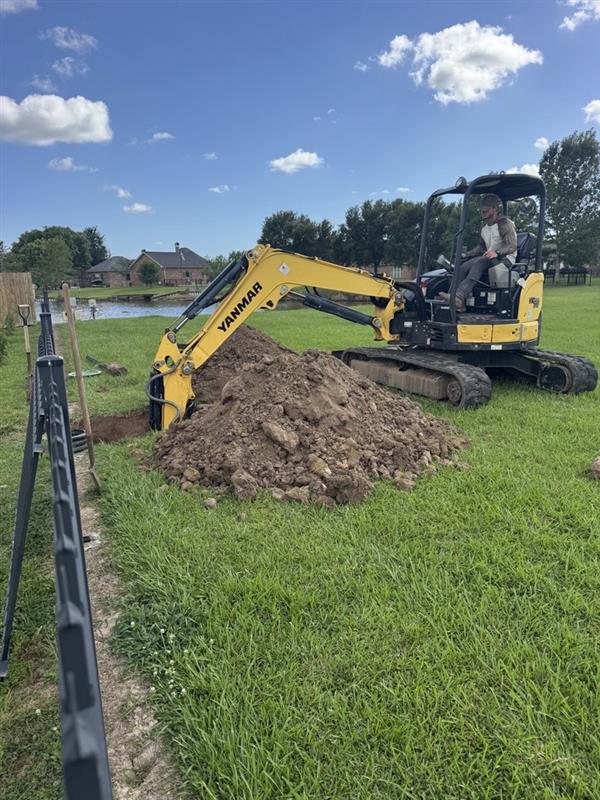
Define the next use of the property
Explain what the site needs to support when the work is complete. Preparing ground for a later phase of construction calls for a different conversation from addressing a drainage concern or removing an existing structure. The intended result helps separate the immediate work from items that may belong to another phase.
Bring any drawings or information from the people involved in the next stage. Even a simple description of the future use can help explain priorities. Identify what is already in place, what needs to remain and where the property currently creates an obstacle to the plan.
Connect site work, drainage and removal
Civil work often involves dependencies. A structure may need to be removed before an area can be prepared, or a trench route may need to be coordinated with the finished layout. Discuss those connections at the beginning so each service is considered in relation to the whole property.
The individual service pages explain what to share for site work, drainage and trenching, and demolition. Use them to gather information rather than trying to select a method on your own. Gator can discuss the proposed scope and identify what needs further review before details are settled.
Make access and existing conditions visible
Include the entrance from the road, gate openings, nearby buildings and any known utilities in the project description. If the property is occupied or in use, explain which areas need to remain accessible and what activities must be coordinated around the work.
For waterfront properties, land-side work may also connect to a dock, shoreline or other marine project. Gator’s marine and civil offerings allow those needs to be raised in the same inquiry. Scope, sequencing and timing still need to be confirmed for the actual site; sharing the full picture helps make that conversation more useful.