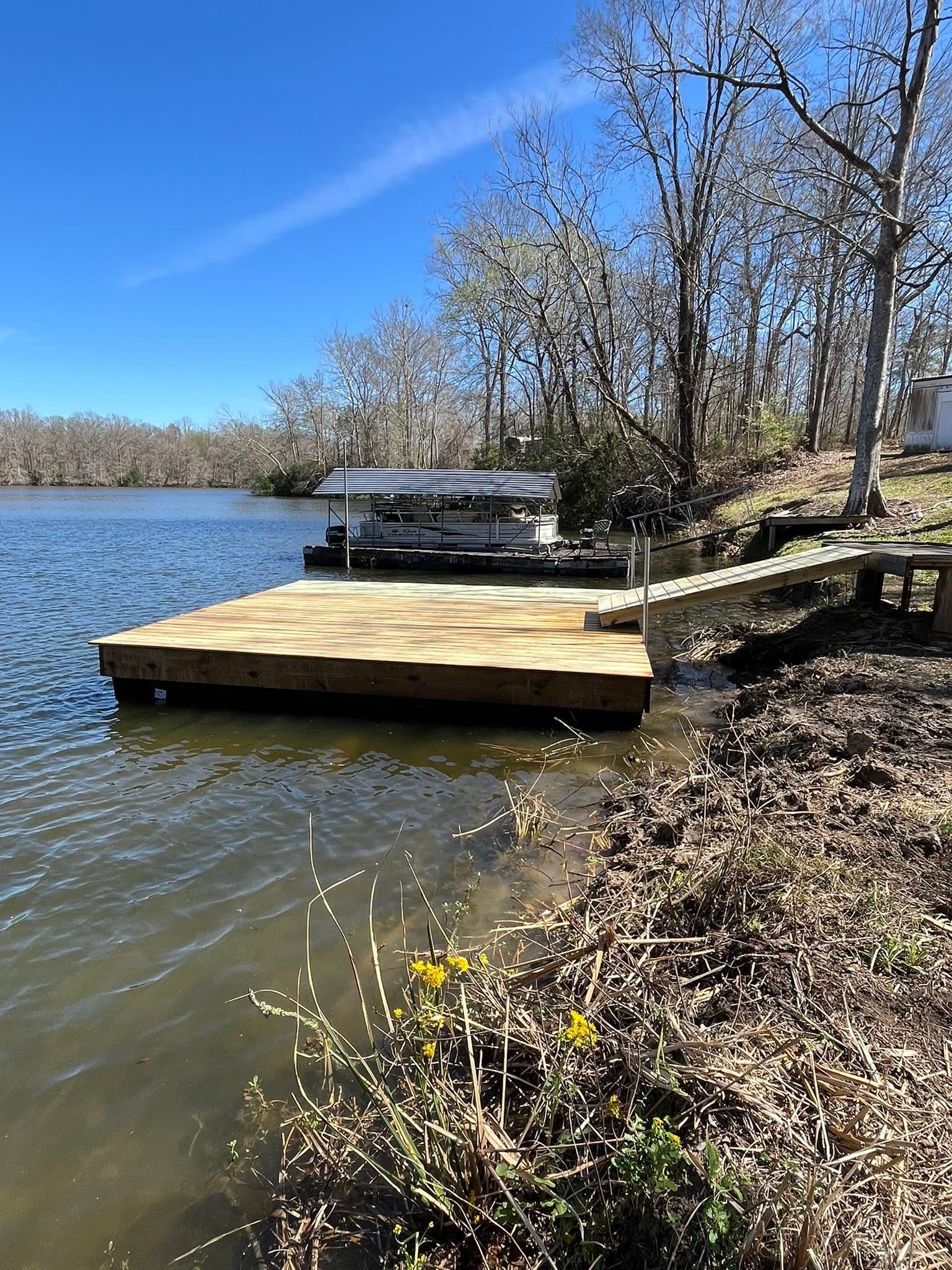
Start with how you use the water
The right starting point is the day-to-day purpose of the property. A place to board a boat has different priorities from a covered storage area or a waterfront used by several people at once. Describe who will use the dock, what needs to reach the water and what is difficult about the current arrangement. Those details help shape a useful scope before individual features are chosen.
Marine work can involve several connected decisions: the route from land to dock, boat storage, the condition of the shoreline and access for construction. Bringing those decisions into one conversation helps identify dependencies between the waterfront and any work needed on land.
Choose the part of the project you need
Explore docks, boat houses and lifts for everyday waterfront access and storage. For a manufactured aluminum dock system, the Wahoo Docks page explains the layout questions to bring to Gator as an authorized dealer. Bulkhead and riprap planning focuses on the edge of the property, while dredging and permitting discussions address water access and the requirements that may shape the work.
You do not need a finished design to start a conversation. If several services appear relevant, describe the overall problem instead of choosing a construction method in advance. Photos of the waterfront and a sketch of the intended use can make that first discussion more productive.
Bring the land side into the plan
Construction access matters as much as the finished view. Include the route from the road, gates, nearby structures and any existing drainage when you describe the property. If site preparation or trenching is part of the same project, identifying it early helps keep those needs connected to the marine scope.
Share any existing drawings, property information and correspondence about project approvals. Gator can then discuss the information needed to confirm design details, availability and the sequence of work for your property.